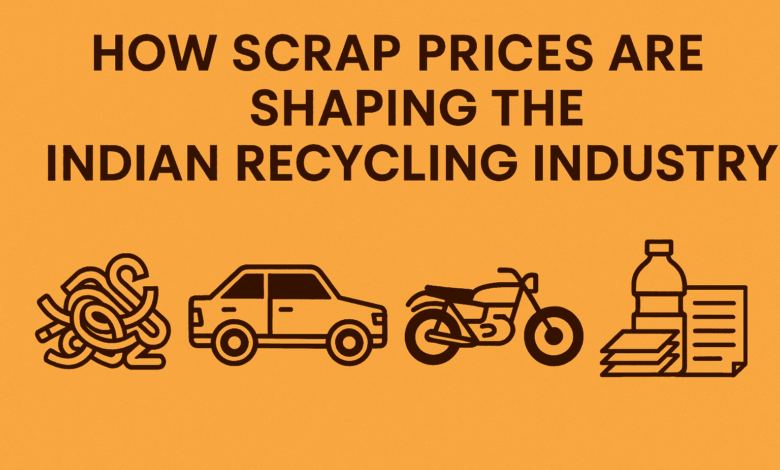
India is undergoing a recycling revolution. As the country continues to urbanize and industrialize, it also produces millions of tonnes of scrap every year—from metals and plastics to electronic waste and even end-of-life vehicles. Among the biggest influencers of this change are scrap prices, which directly impact how efficiently the Indian recycling industry functions. Whether you’re a car scrap dealer, a bike scrap dealer, or a major recycling company, the value of scrap defines your business decisions.
Scrap Prices: The Industry’s Pulse
Scrap prices are not static—they fluctuate based on market demand, international metal rates, fuel costs, and government policies. These prices influence not only what gets recycled but also how efficiently the recycling supply chain operates.
When scrap prices rise, everyone—from waste pickers to formal recyclers—benefits. High prices encourage more people to collect, sort, and sell waste materials like iron, aluminium, copper, and plastic. When prices fall, many collectors—especially those in the informal sector—pull back due to reduced profitability.
Vehicle Scrap: A Growing Opportunity
India’s vehicle population is soaring, and so is the volume of scrapped vehicles. The government’s Vehicle Scrappage Policy is pushing more old and polluting cars and bikes off the roads, opening doors for businesses.
Car Scrap Dealers
A car scrap dealer in India today plays a key role in the circular economy. These dealers acquire deregistered or old vehicles, remove reusable parts, and recycle the remaining scrap metal. The rising steel scrap prices and incentives for scrapping make this a profitable niche. However, when prices crash, these businesses face inventory losses and lower margins.
Bike Scrap Dealers
Similarly, a bike scrap dealer deals with two-wheelers past their functional life. As demand for electric scooters grows, older bikes are being phased out. Dealers often depend on fluctuating iron and alloy prices, and a sudden drop can make it infeasible to process and dismantle low-value vehicles.

Informal Sector: The Hidden Backbone
Nearly 80% of India’s scrap collection happens through informal channels—kabadiwalas, ragpickers, and small-time scrap collectors. When scrap prices fall, these workers face reduced earnings, which leads to less collection, more littering, and declining recycling rates. The government’s pricing mechanisms and subsidies are still not robust enough to protect this vulnerable sector.
Role of Digital Platforms
Digital transformation is beginning to touch the recycling industry. Platforms now offer real-time scrap rate tracking, vehicle scrapping services, and online pickup for households and businesses.
Some startups connect users directly with verified bike and car scrap dealers, offering better rates and eco-friendly disposal. These platforms ensure that the scrap recycling ecosystem remains organized, transparent, and profitable for everyone involved.
Environmental Impact of Scrap Pricing
When scrap prices are stable and profitable, more waste is diverted from landfills to recycling units. This leads to:
- Reduced pollution
- Lower carbon emissions
- Conservation of raw materials
- Cleaner cities
But when prices drop or become volatile, the system stalls. Collection slows down, recyclers downsize, and waste piles up—reversing years of environmental progress.
Final Thoughts
In a country as diverse and dynamic as India, scrap prices don’t just influence profits—they shape the entire recycling chain. Whether you are a car scrap dealer, bike scrap dealer, or a consumer trying to dispose of your waste responsibly, staying informed about scrap rates is critical.
At Smart Kabadi, we’re leading this change by offering fair, real-time pricing and transparent service. We work closely with scrap dealers, recyclers, and individuals to promote sustainable recycling practices. Our goal is simple: to help India turn waste into wealth—ethically, efficiently, and economically.